
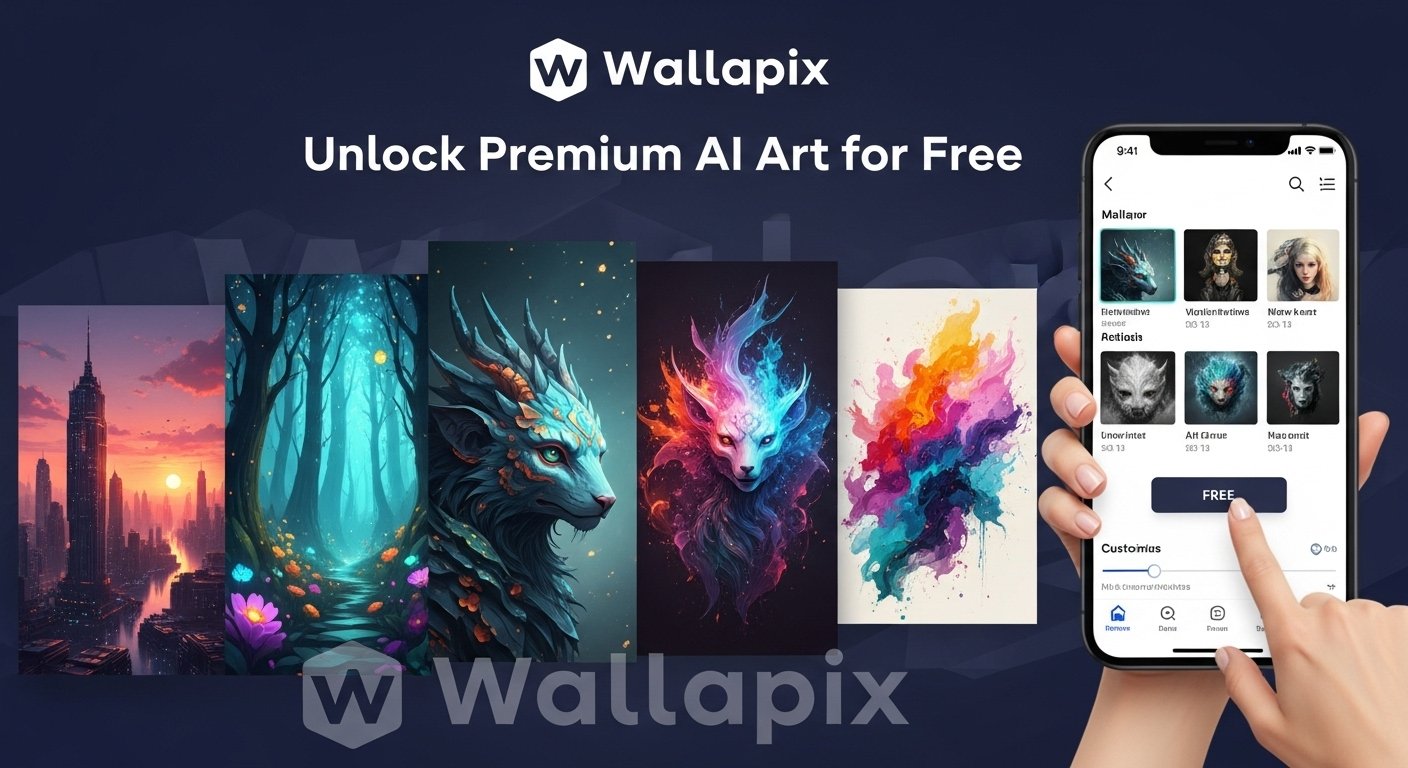
The first time a founder showed me an AI generated image that looked ready for a global campaign, I asked who their agency was. The answer surprised me. There was no agency, no creative retainer, and no design team working overnight. There was only a browser tab open to Wallapix. That moment captured something important about where creative technology is headed. Power is moving closer to individuals, and tools that once felt exclusive are becoming widely accessible.
For entrepreneurs, product builders, and digital creators, visuals are no longer optional. They are currency. In a feed-driven economy, the image often speaks before the product does. Wallapix sits right at that intersection, offering a way to generate premium-looking AI art without the cost or complexity that usually comes with advanced creative tools.
Why AI Art Matters More Than Ever
Visual storytelling has become a business skill, not just a design specialty. Founders pitch with slides that need emotional weight. Marketers compete for seconds of attention on social platforms. App builders need polished visuals before a single line of code turns into revenue.
Until recently, achieving that level of quality meant hiring designers or subscribing to expensive platforms. AI shifted the equation, but many tools still place meaningful features behind paywalls. Wallapix enters this space with a different promise. It lowers the barrier without stripping away quality, which is why it has quietly gained traction among early stage teams and independent creators.
What Wallapix Actually Is
At its core, Wallapix is an AI powered image generation platform designed to feel simple without being shallow. Users describe what they want to see, and the system translates text into detailed visuals that resemble professional digital art, illustrations, or concept designs.
What sets Wallapix apart is not just the output, but the access. Many platforms advertise free tiers that feel more like demos. Wallapix offers enough creative freedom to make the tool genuinely useful for real projects, not just experimentation.
The Experience Behind the Interface
One reason Wallapix resonates with non designers is its restraint. The interface does not overwhelm users with technical jargon or endless configuration options. Instead, it encourages exploration through language. You type an idea, refine it, and watch variations emerge.
This matters in a business context. When tools get out of the way, creativity moves faster. Founders can iterate on branding concepts in minutes. Content teams can test multiple visual directions before committing to one. The speed changes how decisions are made.
Where Wallapix Fits in a Business Workflow
AI art tools often get framed as novelties, but Wallapix has practical use cases that extend well beyond curiosity. Startups use it for landing page visuals when budgets are tight. Newsletter writers use it to create distinctive header images. Social media managers rely on it to maintain a consistent visual identity without relying on stock photography.
Below is a simple comparison that shows where Wallapix typically fits alongside other creative options.
| Creative Need | Traditional Approach | AI Tools | Wallapix |
|---|---|---|---|
| Brand concepts | Design agency | Paid AI platforms | Fast, free exploration |
| Social visuals | Stock libraries | Limited free tiers | Custom and flexible |
| Idea testing | Mood boards | Manual iteration | Rapid visual feedback |
This positioning explains its appeal. Wallapix does not try to replace designers. It helps teams arrive at clearer ideas before investing further.
The Democratization of Visual Creativity
There is a larger story unfolding here. Tools like Wallapix reflect a broader shift toward democratized creativity. When anyone can generate high quality visuals, the competitive edge moves away from access and toward taste, storytelling, and strategy.
That shift is especially important for founders in emerging markets or bootstrapped environments. The ability to present ideas visually can influence investor perception, customer trust, and internal alignment. Wallapix quietly levels that playing field.
Ethical and Creative Considerations
No discussion of AI art is complete without addressing concerns. Questions around originality, ownership, and artistic value continue to surface. Wallapix operates within the same evolving landscape as other AI platforms, and users still carry responsibility for how outputs are used.
From a business perspective, transparency matters. Using AI generated visuals should support clarity, not mislead audiences. The most effective teams treat Wallapix as a creative partner, not a shortcut to authenticity.
How Founders and Creators Are Using It Today
Conversations with early users reveal a pattern. Wallapix often becomes a brainstorming companion rather than a final production tool. Teams generate visuals to spark discussion, align stakeholders, or test emotional responses.
In some cases, the AI generated image becomes the final asset. In others, it informs a designer’s next iteration. Either way, the value lies in acceleration. Decisions happen faster because ideas become visible sooner.
Looking Ahead
The future of AI art tools will not be defined by novelty alone. It will be shaped by how seamlessly they integrate into real workflows. Wallapix has an opportunity to grow by staying focused on usability, fairness, and creative empowerment.
As the space matures, users will demand more control, clearer licensing, and deeper customization. Platforms that listen to those needs will define the next chapter of digital creativity.
Conclusion
Wallapix is not just another AI art generator. It represents a shift in how visual power is distributed across the digital economy. By making premium style AI art accessible without heavy costs, it enables founders and creators to think visually from day one.
The real impact of Wallapix is not in the images it produces, but in the confidence it gives people to express ideas visually. In a world where attention is scarce and storytelling matters, that confidence can make all the difference.